[fusion_builder_container type=”flex” hundred_percent=”no” hundred_percent_height=”no” min_height_medium=”” min_height_small=”” min_height=”” hundred_percent_height_scroll=”no” align_content=”stretch” flex_align_items=”flex-start” flex_justify_content=”flex-start” flex_column_spacing=”” hundred_percent_height_center_content=”yes” equal_height_columns=”no” container_tag=”div” menu_anchor=”” hide_on_mobile=”small-visibility,medium-visibility,large-visibility” status=”published” publish_date=”” class=”” id=”” spacing_medium=”” margin_top_medium=”” margin_bottom_medium=”” spacing_small=”” margin_top_small=”” margin_bottom_small=”” margin_top=”” margin_bottom=”” padding_dimensions_medium=”” padding_top_medium=”” padding_right_medium=”” padding_bottom_medium=”” padding_left_medium=”” padding_dimensions_small=”” padding_top_small=”” padding_right_small=”” padding_bottom_small=”” padding_left_small=”” padding_top=”” padding_right=”” padding_bottom=”” padding_left=”” link_hover_color=”” link_color=”” border_sizes=”” border_sizes_top=”” border_sizes_right=”” border_sizes_bottom=”” border_sizes_left=”” border_color=”” border_style=”solid” border_radius_top_left=”” border_radius_top_right=”” border_radius_bottom_right=”” border_radius_bottom_left=”” box_shadow=”no” box_shadow_vertical=”” box_shadow_horizontal=”” box_shadow_blur=”0″ box_shadow_spread=”0″ box_shadow_color=”” box_shadow_style=”” z_index=”” overflow=”” gradient_start_color=”” gradient_end_color=”” gradient_start_position=”0″ gradient_end_position=”100″ gradient_type=”linear” radial_direction=”center center” linear_angle=”180″ background_color_medium=”” background_color_small=”” background_color=”” background_image_medium=”” background_image_small=”” background_image=”” skip_lazy_load=”” background_position_medium=”” background_position_small=”” background_position=”center center” background_repeat_medium=”” background_repeat_small=”” background_repeat=”no-repeat” background_size_medium=”” background_size_small=”” background_size=”” background_custom_size=”” background_custom_size_medium=”” background_custom_size_small=”” fade=”no” background_parallax=”none” enable_mobile=”no” parallax_speed=”0.3″ background_blend_mode_medium=”” background_blend_mode_small=”” background_blend_mode=”none” video_mp4=”” video_webm=”” video_ogv=”” video_url=”” video_aspect_ratio=”16:9″ video_loop=”yes” video_mute=”yes” video_preview_image=”” pattern_bg=”none” pattern_custom_bg=”” pattern_bg_color=”” pattern_bg_style=”default” pattern_bg_opacity=”100″ pattern_bg_size=”” pattern_bg_blend_mode=”normal” mask_bg=”none” mask_custom_bg=”” mask_bg_color=”” mask_bg_accent_color=”” mask_bg_style=”default” mask_bg_opacity=”100″ mask_bg_transform=”left” mask_bg_blend_mode=”normal” render_logics=”” absolute=”off” absolute_devices=”small,medium,large” sticky=”off” sticky_devices=”small-visibility,medium-visibility,large-visibility” sticky_background_color=”” sticky_height=”” sticky_offset=”” sticky_transition_offset=”0″ scroll_offset=”0″ animation_type=”” animation_direction=”left” animation_color=”” animation_speed=”0.3″ animation_delay=”0″ animation_offset=”” filter_hue=”0″ filter_saturation=”100″ filter_brightness=”100″ filter_contrast=”100″ filter_invert=”0″ filter_sepia=”0″ filter_opacity=”100″ filter_blur=”0″ filter_hue_hover=”0″ filter_saturation_hover=”100″ filter_brightness_hover=”100″ filter_contrast_hover=”100″ filter_invert_hover=”0″ filter_sepia_hover=”0″ filter_opacity_hover=”100″ filter_blur_hover=”0″][fusion_builder_row][fusion_builder_column type=”1_1″ layout=”1_1″ align_self=”auto” content_layout=”column” align_content=”flex-start” valign_content=”flex-start” content_wrap=”wrap” spacing=”” center_content=”no” column_tag=”div” link=”” target=”_self” link_description=”” min_height=”” hide_on_mobile=”small-visibility,medium-visibility,large-visibility” sticky_display=”normal,sticky” class=”” id=”” type_medium=”” type_small=”” order_medium=”0″ order_small=”0″ dimension_spacing_medium=”” dimension_spacing_small=”” dimension_spacing=”” dimension_margin_medium=”” dimension_margin_small=”” margin_top=”” margin_bottom=”” padding_medium=”” padding_small=”” padding_top=”” padding_right=”” padding_bottom=”” padding_left=”” hover_type=”none” border_sizes=”” border_color_hover=”” border_color=”” border_style=”solid” border_radius=”” box_shadow=”no” dimension_box_shadow=”” box_shadow_blur=”0″ box_shadow_spread=”0″ box_shadow_color=”” box_shadow_style=”” z_index_hover=”” z_index=”” overflow=”” background_type=”single” gradient_start_color=”” gradient_end_color=”” gradient_start_position=”0″ gradient_end_position=”100″ gradient_type=”linear” radial_direction=”center center” linear_angle=”180″ background_color_medium=”” background_color_small=”” background_color_hover=”” background_color=”” background_image_medium=”” background_image_small=”” background_image=”” background_image_id_medium=”” background_image_id_small=”” background_image_id=”” lazy_load=”avada” skip_lazy_load=”” background_position_medium=”” background_position_small=”” background_position=”left top” background_repeat_medium=”” background_repeat_small=”” background_repeat=”no-repeat” background_size_medium=”” background_size_small=”” background_size=”” background_custom_size=”” background_custom_size_medium=”” background_custom_size_small=”” background_blend_mode_medium=”” background_blend_mode_small=”” background_blend_mode=”none” render_logics=”” sticky=”off” sticky_devices=”small-visibility,medium-visibility,large-visibility” sticky_offset=”” absolute=”off” absolute_props=”” filter_type=”regular” filter_hover_element=”self” filter_hue=”0″ filter_saturation=”100″ filter_brightness=”100″ filter_contrast=”100″ filter_invert=”0″ filter_sepia=”0″ filter_opacity=”100″ filter_blur=”0″ filter_hue_hover=”0″ filter_saturation_hover=”100″ filter_brightness_hover=”100″ filter_contrast_hover=”100″ filter_invert_hover=”0″ filter_sepia_hover=”0″ filter_opacity_hover=”100″ filter_blur_hover=”0″ transform_type=”regular” transform_hover_element=”self” transform_scale_x=”1″ transform_scale_y=”1″ transform_translate_x=”0″ transform_translate_y=”0″ transform_rotate=”0″ transform_skew_x=”0″ transform_skew_y=”0″ transform_scale_x_hover=”1″ transform_scale_y_hover=”1″ transform_translate_x_hover=”0″ transform_translate_y_hover=”0″ transform_rotate_hover=”0″ transform_skew_x_hover=”0″ transform_skew_y_hover=”0″ transform_origin=”” transition_duration=”300″ transition_easing=”ease” transition_custom_easing=”” motion_effects=”” scroll_motion_devices=”small-visibility,medium-visibility,large-visibility” animation_type=”” animation_direction=”left” animation_color=”” animation_speed=”0.3″ animation_delay=”0″ animation_offset=”” last=”true” border_position=”all” first=”true”][fusion_text columns=”” column_min_width=”” column_spacing=”” rule_style=”” rule_size=”” rule_color=”” hue=”” saturation=”” lightness=”” alpha=”” content_alignment_medium=”” content_alignment_small=”” content_alignment=”” hide_on_mobile=”small-visibility,medium-visibility,large-visibility” sticky_display=”normal,sticky” class=”” id=”” margin_top=”” margin_right=”” margin_bottom=”” margin_left=”” fusion_font_family_text_font=”” fusion_font_variant_text_font=”” font_size=”” line_height=”” letter_spacing=”” text_transform=”” text_color=”” animation_type=”” animation_direction=”left” animation_color=”” animation_speed=”0.3″ animation_delay=”0″ animation_offset=””]
(PPL) Private Pilot License
PPL is the basic course on the way to a career as a professional pilot in an airline company, the first step towards making your dreams come true.

PPL(A) stands for private pilot’s license for airplane. The objective of PPL(A) training is to train pilots to the level of knowledge necessary to enable them to fly as pilot-in-command (PIC) on single-engine piston airplane (SEP) under visual flight rules (VFR) or as co-pilot on an airplane in non-commercial business.
REQUIREMENTS FOR ENROLLMENT IN THE PRIVATE PILOT LICENSE COURSE
To be eligible to obtain a Private Pilot’s license, you must meet certain requirements, such as:
The theoretical part of the training includes 9 subjects of the PPL(A) program and lasts 150 hours. Classes are conducted by professional lecturers in modernly equipped classrooms in Belgrade or Vršac.
PPL(A)
| Theoretical part of the training | ||
| Šifra | Predmet | AA Broj sati |
| 010 | VAZDUHOPLOVNI PROPISI | 10 |
| 020 | OPŠTE POZNAVANJE VAZDUHOPLOVA | 21 |
| 030 | PERFORMANSE I PLANIRANJE LETA (AVIONI) | 10 |
| 040 | LJUDSKE MOGUĆNOSTI | 6 |
| 050 | METEOROLOGIJA | 17 |
| 060 | NAVIGACIJA | 21 |
| 070 | OPERATIVNE PROCEDURE | 6 |
| 080 | TEORIJA LETENJA (AVIONI) | 8 |
| 090 | KOMUNIKACIJE | 12 |
| 111 | ||
| LB | 39 | |
| Total | 150 | |
At the completion of the course you will have to demonstrate a sufficient level of theoretical knowledge, which will be checked on a set of 9 final exams in theoretical subjects. In order to pass the PPL(A theoretical exam at the Public Agency for Civil Aviation of the Republic of Slovenia, you need to be recommended by the Academy as follows: you need to achieve a score of at least 75% correct answers in each subject and attend at least 90% of the lectures from each subject individually within the Academy. The level of required knowledge in the final exam is 75% in each subject.
Flight training is carried out on a single-engine piston-engine airplane (SEP) according to visual flight rules (VFR). The practical part of the training consists of at least 45 hours of flying. In order to start the practical part of the training, you must first pass the exams in all 9 subjects of the PPL(A) program.
| Practical part of the training | ||||||||
| No.
Phase |
Name of phase | Time | VFR | |||||
| Airwork and airport
Flying |
Cross Country
Flying |
Total VFR | ||||||
| DUAL | SOLO | DUAL | SOLO | SPIC | ||||
| 1. | First SOLO | 12:30 | 12:00 | 0:30 | 12:30 | |||
| 2. | Airwork and
First SOLO cross – country |
25:00 | 07:30 | 04:30 | 11:00 | 02:00 | 25:00 | |
| 3. | VFR navigation | 7:30 | 07:30 | 7:30 | ||||
| 45:00 | 19:30 | 05:00 | 11:00 | 09:30 | 45:00 | |||
| Skill Tests | PPL(A) SEP (land) exam | 1:00 | 1:00 | 1:00 | ||||
| TOTAL HOURS | 46:00 | 19:30 | 05:00 | 11:00 | 09:30 | 1:00 | 46:00 | |
30:30 hours of flying with an instructor:
Practical training is divided into three phases, which include flying in accordance with visual meteorological conditions in the traffic circuit, training zones and in navigation flying. In order to move from one training phase to another, it is necessary for the candidate to make continuous progress.
14:30 solo flight hours:
Solo flying hours include local solo flights and solo navigation flights under the supervision of a flight instructor on the ground.
Once you have completed your practical training, you will need to prove your practical skills. The practical skill test is conducted under the supervision of an examiner authorized by the Aviation Authorities.
In the skill test you must demonstrate your ability to:
An applicant who has passed the skill test for a Private Pilot’s License will have the priviledge to fly single-engine piston airplanes (SEP) as endorsed in the license.
[/fusion_text][/fusion_builder_column][/fusion_builder_row][/fusion_builder_container][fusion_builder_container type=”flex” hundred_percent=”no” hundred_percent_height=”no” min_height_medium=”” min_height_small=”” min_height=”” hundred_percent_height_scroll=”no” align_content=”stretch” flex_align_items=”flex-start” flex_justify_content=”flex-start” flex_column_spacing=”” hundred_percent_height_center_content=”yes” equal_height_columns=”no” container_tag=”div” menu_anchor=”” hide_on_mobile=”small-visibility,medium-visibility,large-visibility” status=”published” publish_date=”” class=”” id=”” spacing_medium=”” margin_top_medium=”” margin_bottom_medium=”” spacing_small=”” margin_top_small=”” margin_bottom_small=”” margin_top=”” margin_bottom=”” padding_dimensions_medium=”” padding_top_medium=”” padding_right_medium=”” padding_bottom_medium=”” padding_left_medium=”” padding_dimensions_small=”” padding_top_small=”” padding_right_small=”” padding_bottom_small=”” padding_left_small=”” padding_top=”” padding_right=”” padding_bottom=”” padding_left=”” link_hover_color=”” link_color=”” border_sizes=”” border_sizes_top=”” border_sizes_right=”” border_sizes_bottom=”” border_sizes_left=”” border_color=”” border_style=”solid” border_radius_top_left=”” border_radius_top_right=”” border_radius_bottom_right=”” border_radius_bottom_left=”” box_shadow=”no” box_shadow_vertical=”” box_shadow_horizontal=”” box_shadow_blur=”0″ box_shadow_spread=”0″ box_shadow_color=”” box_shadow_style=”” z_index=”” overflow=”” gradient_start_color=”” gradient_end_color=”” gradient_start_position=”0″ gradient_end_position=”100″ gradient_type=”linear” radial_direction=”center center” linear_angle=”180″ background_color_medium=”” background_color_small=”” background_color=”” background_image_medium=”” background_image_small=”” background_image=”” skip_lazy_load=”” background_position_medium=”” background_position_small=”” background_position=”center center” background_repeat_medium=”” background_repeat_small=”” background_repeat=”no-repeat” background_size_medium=”” background_size_small=”” background_size=”” background_custom_size=”” background_custom_size_medium=”” background_custom_size_small=”” fade=”no” background_parallax=”none” enable_mobile=”no” parallax_speed=”0.3″ background_blend_mode_medium=”” background_blend_mode_small=”” background_blend_mode=”none” video_mp4=”” video_webm=”” video_ogv=”” video_url=”” video_aspect_ratio=”16:9″ video_loop=”yes” video_mute=”yes” video_preview_image=”” pattern_bg=”none” pattern_custom_bg=”” pattern_bg_color=”” pattern_bg_style=”default” pattern_bg_opacity=”100″ pattern_bg_size=”” pattern_bg_blend_mode=”normal” mask_bg=”none” mask_custom_bg=”” mask_bg_color=”” mask_bg_accent_color=”” mask_bg_style=”default” mask_bg_opacity=”100″ mask_bg_transform=”left” mask_bg_blend_mode=”normal” render_logics=”” absolute=”off” absolute_devices=”small,medium,large” sticky=”off” sticky_devices=”small-visibility,medium-visibility,large-visibility” sticky_background_color=”” sticky_height=”” sticky_offset=”” sticky_transition_offset=”0″ scroll_offset=”0″ animation_type=”” animation_direction=”left” animation_color=”” animation_speed=”0.3″ animation_delay=”0″ animation_offset=”” filter_hue=”0″ filter_saturation=”100″ filter_brightness=”100″ filter_contrast=”100″ filter_invert=”0″ filter_sepia=”0″ filter_opacity=”100″ filter_blur=”0″ filter_hue_hover=”0″ filter_saturation_hover=”100″ filter_brightness_hover=”100″ filter_contrast_hover=”100″ filter_invert_hover=”0″ filter_sepia_hover=”0″ filter_opacity_hover=”100″ filter_blur_hover=”0″][fusion_builder_row][fusion_builder_column type=”1_1″ layout=”1_1″ align_self=”auto” content_layout=”column” align_content=”flex-start” valign_content=”flex-start” content_wrap=”wrap” spacing=”” center_content=”no” column_tag=”div” link=”” target=”_self” link_description=”” min_height=”” hide_on_mobile=”small-visibility,medium-visibility,large-visibility” sticky_display=”normal,sticky” class=”” id=”” type_medium=”” type_small=”” order_medium=”0″ order_small=”0″ dimension_spacing_medium=”” dimension_spacing_small=”” dimension_spacing=”” dimension_margin_medium=”” dimension_margin_small=”” margin_top=”” margin_bottom=”” padding_medium=”” padding_small=”” padding_top=”” padding_right=”” padding_bottom=”” padding_left=”” hover_type=”none” border_sizes=”” border_color_hover=”” border_color=”” border_style=”solid” border_radius=”” box_shadow=”no” dimension_box_shadow=”” box_shadow_blur=”0″ box_shadow_spread=”0″ box_shadow_color=”” box_shadow_style=”” z_index_hover=”” z_index=”” overflow=”” background_type=”single” gradient_start_color=”” gradient_end_color=”” gradient_start_position=”0″ gradient_end_position=”100″ gradient_type=”linear” radial_direction=”center center” linear_angle=”180″ background_color_medium=”” background_color_small=”” background_color_hover=”” background_color=”” background_image_medium=”” background_image_small=”” background_image=”” background_image_id_medium=”” background_image_id_small=”” background_image_id=”” lazy_load=”avada” skip_lazy_load=”” background_position_medium=”” background_position_small=”” background_position=”left top” background_repeat_medium=”” background_repeat_small=”” background_repeat=”no-repeat” background_size_medium=”” background_size_small=”” background_size=”” background_custom_size=”” background_custom_size_medium=”” background_custom_size_small=”” background_blend_mode_medium=”” background_blend_mode_small=”” background_blend_mode=”none” render_logics=”” sticky=”off” sticky_devices=”small-visibility,medium-visibility,large-visibility” sticky_offset=”” absolute=”off” absolute_props=”” filter_type=”regular” filter_hover_element=”self” filter_hue=”0″ filter_saturation=”100″ filter_brightness=”100″ filter_contrast=”100″ filter_invert=”0″ filter_sepia=”0″ filter_opacity=”100″ filter_blur=”0″ filter_hue_hover=”0″ filter_saturation_hover=”100″ filter_brightness_hover=”100″ filter_contrast_hover=”100″ filter_invert_hover=”0″ filter_sepia_hover=”0″ filter_opacity_hover=”100″ filter_blur_hover=”0″ transform_type=”regular” transform_hover_element=”self” transform_scale_x=”1″ transform_scale_y=”1″ transform_translate_x=”0″ transform_translate_y=”0″ transform_rotate=”0″ transform_skew_x=”0″ transform_skew_y=”0″ transform_scale_x_hover=”1″ transform_scale_y_hover=”1″ transform_translate_x_hover=”0″ transform_translate_y_hover=”0″ transform_rotate_hover=”0″ transform_skew_x_hover=”0″ transform_skew_y_hover=”0″ transform_origin=”” transition_duration=”300″ transition_easing=”ease” transition_custom_easing=”” motion_effects=”” scroll_motion_devices=”small-visibility,medium-visibility,large-visibility” animation_type=”” animation_direction=”left” animation_color=”” animation_speed=”0.3″ animation_delay=”0″ animation_offset=”” last=”true” border_position=”all” first=”true”][fusion_accordion type=”” inactive_icon=”fa-plane fas” active_icon=”fa-plane-departure fas” margin_top=”” margin_bottom=”” hide_on_mobile=”small-visibility,medium-visibility,large-visibility” class=”” id=”” boxed_mode=”” border_size=”1″ border_color=”” hue=”” saturation=”” lightness=”” alpha=”” hover_color=”” background_color=”” divider_line=”” divider_hover_color=”” divider_color=”” padding_top=”” padding_right=”” padding_bottom=”” padding_left=”” title_tag=”h4″ fusion_font_family_title_font=”” fusion_font_variant_title_font=”” title_font_size=”” title_line_height=”1.36″ title_letter_spacing=”0″ title_text_transform=”” title_color=”#212934″ icon_size=”” icon_color=”” icon_boxed_mode=”” icon_box_color=”” icon_alignment=”” fusion_font_family_content_font=”” fusion_font_variant_content_font=”” content_font_size=”” content_line_height=”” content_letter_spacing=”” content_text_transform=”” content_color=”#4a4e57″ toggle_hover_accent_color=”” toggle_active_accent_color=””][fusion_toggle title=” ATP(A) Integrated” open=”no” class=”” id=”” fusion_font_family_title_font=”” fusion_font_variant_title_font=”” title_font_size=”” title_line_height=”” title_letter_spacing=”” title_text_transform=”” title_color=”#212934″ hue=”” saturation=”” lightness=”” alpha=”” fusion_font_family_content_font=”” fusion_font_variant_content_font=”” content_font_size=”” content_line_height=”” content_letter_spacing=”” content_text_transform=”” content_color=”#4a4e57″]
(ATP) Airline Transport Pilot License

The ATP(A) integrated course is the best path to your successful pilot career. The ATP(A) course is the fastest way to obtain a commercial pilot’s license. At the end of this training, you will have a CPL (Commercial Pilot’s Licence) with (MEP) (Multi Engine Rating) and (IR) (Instrument Rating) as well as ATP theory credit, which will enable you to obtain an ATP license later.
The Commercial Commercial Pilot CPL(A) license entitles you to fly commercially as pilot-in-command on any aircraft with a maximum take-off weight not exceeding 5700kg, and if you complete the MCC course, you will be able to fly as co-pilot on any airplane, in all weather conditions. For the Airline Transport Pilot License (ATPL) you only need experience and a skill test afterwards, there are no more theoretical tests. You may operate commercial flights that require 2 (two) pilots and are conducted in accordance with visual and instrument flight rules. You can fly large commercial airplanes, first as a co-pilot and later as a captain.
Our ATP(A) integrated course takes you from little or no flying experience to a fully qualified airline pilot in around 70 weeks.
At the Aviation Academy, you have a reliable partner for this demanding training: We have the necessary infrastructure and the best conditions – superbly maintained airplanes, flight simulators and excellent instructors with significant experience.
At the end of the training you obtain an CPL with Frozen ATP(A) license as well as MCC training, which will allow you to fly in the right seat of the cockpit, and you can apply for a job in any of the airlines around the world. Our candidates who have successfully completed their training with our team have found work within a year of completion and are currently employed in various airlines around the world.
The training is conducted by experienced instructors, at our airport in Vršac (International Airport ’Vršac’ – LYVR), in controlled airspace. We use a modern Garmin-equipped fleet of Cessna 172 S airplanes and the FNPT II device simulator ALSIM ALX. This is the perfect combination of training to gain skills and experience for your future career as an airline pilot.
We are constantly developing our training concept and by integrating the theoretical and practical part of the training, we create the conditions for you to start flying at an early stage of training. In that way, you start to gain your first flying experiences and skills very early in the cockpit.
Enrollment in ATP(A) training is open to all applicants without any restrictions regarding nationality or age.
You should meet the following requirements:
The Entry test, before enrolling on the ATP(A) integrated pilot training course, is very important to ensure you have the necessary knowledge and skills to successfully complete the course.
What is the English Language Proficiency test?
English language proficiency is a test designed in accordance with ICAO guidelines, that determines the applicant’s ability to speak and understand English in an aviation environment and is not a test of operational knowledge or phraseology
The minimum level for entering the language authority in the permit is ICAO level 4.
The candidate’s knowledge is assessed in all six ICAO skill areas:
How long is the ICAO ELP valid for?
If the candidate achieves level 1, 2 or 3 on the test, it means that he cannot enter the knowledge level on his license and must take a new test.
If the candidate reaches level 4 (operational level), he obtains a certificate of knowledge of the aviation English language for 4 years, while reaching level 5 (advanced level) he receives a certificate for 6 years and level 6 (expert level) is a permanent certificate.
You can take the ELP test at our Aviation Academy.
What is an EASA Class I Medical Certificate?
A Class I Medical Certificate is evidence from an authorized physician that the applicant meets the medical requirements for operating an airplane in flight, in accordance with EASA regulations.
The applicant must maintain a valid EASA Class I Medical Certificate throughout flight training and professional pilot career.
In order to obtain an initial EASA Medical Certificate, it is mandatory that you successfully pass a series of medical examinations to prove that you meet all the prescribed health criteria.
What happens after the initial issue of the EASA Class I Medical Certificate?
Once you have successfully passed the initial medical examinatioss for an EASA Class I Medical Certificate, it will be valid for one year. After this period expires, you should renew it every year.
The theoretical part of the training includes the subjects of the ATP(A) Integrated program and lasts 810 hours. Classes are conducted by professional lecturers in modernly equipped classrooms in Belgrade or Vršac.
ATP(A) Integrated
| Theoretical training | ||
| Code | Subject | AA Number of hours |
| 010 | AIR LAW | 35 |
| 021 | AIRCRAFT GENERAL KNOWLEDGE – AIRFRAME/SYSTEMS/POWER PLANT | 102 |
| 022 | AIRCRAFT GENERAL KNOWLEDGE – INSTRUMENTATION | 60 |
| 031 | MASS AND BALANCE | 30 |
| 032 | PERFORMANCE (AEROPLANES) | 48 |
| 033 | FLIGHT PLANNING AND MONITORING | 54 |
| 040 | HUMAN PERFORMANCE | 73 |
| 050 | METEOROLOGY | 66 |
| 061 | GENERAL NAVIGATION | 72 |
| 062 | RADIO NAVIGATION | 60 |
| 070 | OPERATIONAL PROCEDURES | 30 |
| 081 | PRINCIPLES OF FLIGHT (AEROPLANES) | 60 |
| 090 | COMMUNICATIONS | 36 |
| 100 | KSA | 24 |
| 750 | ||
| LB | 30 | |
| Advanced UPRT training | 5 | |
| MCC | 25 | |
| TOTAL | 810 | |
At the completion of the course, you will have to demonstrate a sufficient level of theoretical knowledge, which will be checked on a set of final exams in theoretical subjects. To pass the ATP(A) theoretical exam, you need to achieve a score of at least 75% correct answers in each subject and attend at least 90% of the lectures in each individual subject. The theoretical exams are conducted by the Public Agency for Civil Aviation of the Republic of Slovenia, which is the same as for PPL training.
Flight training is carried out on the Cessna 172 S single-engine airplane, the FNPT II device ALSIM ALX flight simulator and the Piper PA-34-220T Seneca IV twin-engine airplane and is divided into six phases. The practical part of the training consists of at least 221:40 hours of flight, of which 98:40 hours according to visual flight rules (VFR) and 123:00 hours according to instrument flight rules (IFR).
| Flight Training | ||||||||||||||
| No.
Phase |
Name of phase | Time | VFR | IFR | ||||||||||
| Airwork and airport
Flying |
Cross – Country
Flying |
Total VFR | Terminal area | Cross-Country | FSTD | Total IFR | ||||||||
| DUAL | SOLO | DUAL | SOLO | SPIC | DUAL | SPIC | DUAL | SPIC | ||||||
| 1. | First SOLO | 13:00 | 12:30 | 0:30 | 13:00 | |||||||||
| 2. | Airwork and first SOLO cross – country | 25:00 | 6:15 | 8:00 | 8:45 | 2:00 | 25:00 | |||||||
| 3. | VFR navigation | 40:00 | 1:30 | 38:30 | 40:00 | |||||||||
| VFR Airwork | 2:00 | 2:00 | 2:00 | |||||||||||
| Night VFR | 3:00 | 2:00 | 1:00 | 3:00 | ||||||||||
| 4. | VFR / IFR on SEP | 62:40 | 02:30 | 01:10 | 01:00 | 4:40 | 28:00 | 11:00 | 10:00 | 09:00 | 58:00 | |||
| Night VFR | 2:00 | 1:00 | 1:00 | 2:00 | ||||||||||
| VFR/IFR on MEP | 51:00 | 6:00 | 6:00 | 5:00 | 40:00 | 45:00 | ||||||||
| 5. | Advanced UPRT | 3:00 | 3:00 | 3:00 | ||||||||||
| 6. | Multi Crew Cooperation (MCC) | 20:00 | 20:00 | 20:00 | ||||||||||
| 221:40 | 35:15 | 11:00 | 10:55 | 40:30 | 01:00 | 98:40 | 33:00 | 11:00 | 10:00 | 09:00 | 60:00 | 123:00 | ||
| Skill Tests | SEP(land) | 1:00 | 1:00 | |||||||||||
| SEP / IR (optional) | 1:00 | 1:00 | ||||||||||||
| CPL(A) and MEP (land) rating | 2:00 | 2:00 | ||||||||||||
| MEP / IR | 1:00 | 1:00 | ||||||||||||
| TOTAL | 226:40 | 101:40 | 125:00 | |||||||||||
Once you have completed your flight training, you will need to prove your flying skills. The skill test is conducted under the supervision of an examiner authorized by the aviation authorities. You take the test on a twin-engine airplane, which you are already familiar with, from training.
A candidate who has completed ATP(A) training with us and passed the skill test for a Professional Pilot’s License, shall have the priviledges of flying the classes of single-engine piston (SEP) and multi-engine piston (MEP) airplanes endorsed in the license: a single-engine Cessna 172 and a twin-engine Piper Seneca.
ADVANTAGES OF OUR TRAINING
[/fusion_toggle][fusion_toggle title=”EASA (SEP) (A)” open=”no” class=”” id=”” fusion_font_family_title_font=”” fusion_font_variant_title_font=”” title_font_size=”” title_line_height=”” title_letter_spacing=”” title_text_transform=”” title_color=”#212934″ hue=”” saturation=”” lightness=”” alpha=”” fusion_font_family_content_font=”” fusion_font_variant_content_font=”” content_font_size=”” content_line_height=”” content_letter_spacing=”” content_text_transform=”” content_color=”#4a4e57″]
(Single – Engine Piston rating)
Every pilot will fly a single-engine airplane at some point in their career, but not all will earn or maintain the appropriate rating

To simplify, having this class rating enables you to fly these airplanes with your existing license.
To enroll in the EASA SEP, you must meet the following requirements:
Structure of (SEP) training
The theoretical part consists of 6 subjects (6 hours), and the flight training lasts 3:00 hours. The complete training is completed within five days depending on the weather conditions.
EASA (SEP) (Single – Engine Piston Rating)
| Theory Subject | Number of hours |
| Airplane structure and equipment | 1 |
| Normal operation of systems | 1 |
| Limitations and malfunctions | 1 |
| Performance, flight planning and monitoring | 1 |
| Load, balance and servicing | 1 |
| Emergency procedures | 1 |
| TOTAL | 6 |
| Flight Training | |||||||
| SESSION | VFR | ||||||
| DUAL | SOLO | SPIC | NIGHT | X / C | FNPT II | ||
| SE101 | Effects of controls / Slow flight / Turns | 0:40 | |||||
| SE102 | Traffic Circuits | 0:30 | |||||
| SE103 | Traffic Circuits | 0:30 | |||||
| SE104B | Traffic Circuits / Emergencies | 0:40 | |||||
| SE105 | Traffic Circuits / Emergencies | 0:40 | |||||
| TOTAL | 03:00 | ||||||
[/fusion_toggle][fusion_toggle title=”EASA (MEP) (A)” open=”no” class=”” id=”” fusion_font_family_title_font=”” fusion_font_variant_title_font=”” title_font_size=”” title_line_height=”” title_letter_spacing=”” title_text_transform=”” title_color=”#212934″ hue=”” saturation=”” lightness=”” alpha=”” fusion_font_family_content_font=”” fusion_font_variant_content_font=”” content_font_size=”” content_line_height=”” content_letter_spacing=”” content_text_transform=”” content_color=”#4a4e57″]
(Multi – Engine Piston rating)
A multi-engine piston class rating allows you to progress to flying more powerful twin-engine airplanes and is an essential step if you want to pursue a professional flying career

Fly multi-engine airplanes
Master the technique of flying more complex multi-engine airplanes like the Piper Seneca. These types of airplane provide additional safety because they have two engines instead of just one. You also learn to control the airplane under asymmetric (only one engine operation) power.
Flying a multi-engine piston airplane is a huge step up from the single-engine airplanes you’ve flown so far. This will allow you to conduct flights that provide additional safety, as you are now flying on a twin-engine airplane. If you intend to build a commercial flying career, the (MEP) rating is a must.
To enroll in an EASA MEP course, to fly a class of multi-engine piston airplane, you need to meet the following requirements:
Structure of (MEP) training
The theoretical part consists of 6 subjects (11 hours) that are completed within one week. The flight training includes 06:30 hours and lasts two weeks and is performed in (VFR) and (IFR) conditions.
EASA (MEP) (Multi – Engine Piston Rating)
| Theory Subject | Number of hours |
| Airplane and Engine Systems | 3 |
| Constant Speed Propellers and Feathering | 1 |
| Multi Engine Flight Principles | 1 |
| Minimum Control & Safety Speeds | 1 |
| Mass & Balance, performance and limitations | 2 |
| Effects of Engine Failure on Systems and Performance | 3 |
| TOTAL | 11 |
| Flight Training | ||||||||
| SESSION | VFR | |||||||
| DUAL | SOLO | SPIC | NIGHT | X / C | FNPT II | |||
| ME 435 | Basic maneuvers / Slow flight | 1 | 1:00 | |||||
| ME 436 | Basic maneuvers / Slow flight | 1 | 1:00 | |||||
| ME 437 | Circuits / emergencies | 10 | 1:00 | |||||
| ME 438 | Circuits / emergencies | 10 | 1:00 | |||||
| ME 439 | Circuits / OEI procedures | 10 | 1:00 | |||||
| ME 440 | Circuits / OEI procedures | 10 | 1:00 | |||||
| Check | 3 | 00:30 | ||||||
| TOTAL | 45 | 06:30 | ||||||
[/fusion_toggle][fusion_toggle title=”EASA (FI) (A)” open=”no” class=”” id=”” fusion_font_family_title_font=”” fusion_font_variant_title_font=”” title_font_size=”” title_line_height=”” title_letter_spacing=”” title_text_transform=”” title_color=”#212934″ hue=”” saturation=”” lightness=”” alpha=”” fusion_font_family_content_font=”” fusion_font_variant_content_font=”” content_font_size=”” content_line_height=”” content_letter_spacing=”” content_text_transform=”” content_color=”#4a4e57″]
(Flight Instructor rating)
Love teaching but also love aviation? Take the opportunity to get your airplane flight instructor’s license and train young aspiring pilots how to fly.

To enroll in the EASA course for obtaining a Flight Instructor (FI) Rating, you need to meet the following requirements:
How long does it take to become a flight instructor?
The flight instructor course lasts approximately 13 weeks and consists of theoretical training and flight training.
The flight instructor course consists of the following 3 parts:
Theoretical training
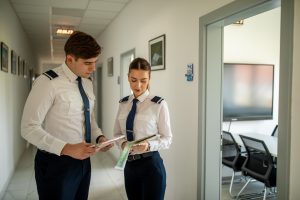
The aim of theoretical training is to prepare the future flight instructor (FI) for teaching and learning methods. Student psychology and various teaching techniques are studied in 125 hours of Ground School, including briefings and debriefings. During the theoretical training, the candidate will give numerous lectures to a live audience (active training students) on various aviation topics.
Flighting Training
Total (FI) training is completed in 30 hours. 25 hours will be realized on a single-engine airplane (SEP) and 5 hours in FNPT II.
EASA Flight Instructor
| Training segment | Duration | Hours |
| Teaching and Learning | 5 weeks | 125 |
| Flight Training | 8 weeks | 30 |
Competency assessment.
At the end of the flight instructor course, you must pass a competency assessment, which consists of a theoretical part and 01:30 hours of flying in a single-engine airplane (SEP) with an authorized examiner.
What airplanes are used during the flight instructor course?
During your flight instructor course, you will train on the Cessna 172 S single-engine airplane and the FNPT II virgin ALSIM ALX flight simulator.
[/fusion_toggle][fusion_toggle title=”EASA (IRI) (A)” open=”no” class=”” id=”” fusion_font_family_title_font=”” fusion_font_variant_title_font=”” title_font_size=”” title_line_height=”” title_letter_spacing=”” title_text_transform=”” title_color=”#212934″ hue=”” saturation=”” lightness=”” alpha=”” fusion_font_family_content_font=”” fusion_font_variant_content_font=”” content_font_size=”” content_line_height=”” content_letter_spacing=”” content_text_transform=”” content_color=”#4a4e57″]
Instrument Rating Instructor
This course provides the training necessary to obtain an instrument flight instructor rating

This is your chance to train young, aspiring pilots instrument flying.
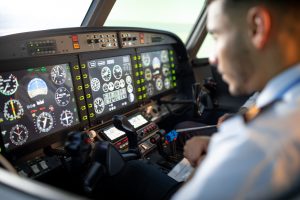
More specifically, the Instrument Rating (IRI) is to conduct flight training for the issuance, revalidation or renewal of an IR (Instrument Rating) in the appropriate airplane category.
In order to enroll in the EASA course for obtaining the Instrument Rating Instructor (IRI), you need to fulfill the following requirements:
Structure of (IRI) training
The theoretical part of the training consists of 35 hours which are completed within two weeks, and the practical training lasts 10:00 hours on an airplane or on a flight simulator and lasts for two weeks.
EASA (IRI) (A) Instrument Rating Instructor
EASA (IRI) (A) Instrument Rating Instructor
| Training segment | Duration | Hours |
| Theoretical training | 2 weeks | 35 |
| Flight Training | 3 week | 10 |
[/fusion_toggle][fusion_toggle title=”EASA (CRI)” open=”no” class=”” id=”” fusion_font_family_title_font=”” fusion_font_variant_title_font=”” title_font_size=”” title_line_height=”” title_letter_spacing=”” title_text_transform=”” title_color=”#212934″ hue=”” saturation=”” lightness=”” alpha=”” fusion_font_family_content_font=”” fusion_font_variant_content_font=”” content_font_size=”” content_line_height=”” content_letter_spacing=”” content_text_transform=”” content_color=”#4a4e57″]
Class Rating Instructor
This course provides the necessary training for obtaining a flight instructor rating on a multi-engine airplane (MEP) class.

The course has the task of providing the candidates with the appropriate knowledge and skills in order to acquire the competences of a training instructor for airplane class.
To enroll in the EASA Class Rating Instructor single-engine (CRI) course, you need to meet the following requirements:
To enroll in the EASA Class Rating Instructor multi-engine (CRI) course, you need to meet the following requirements:
Structure of (CRI) training
The theoretical part of the training consists of 35 hours that are completed within two weeks, and the flight training lasts 05:00 hours and lasts one week.
EASA (CRI) (A) Class Rating Instructor
| Training segment | Duration | Hours |
| Theoretical training | 2 weeks | 35 |
| Flight Training | 1 week | 5 hours |
[/fusion_toggle][fusion_toggle title=”EASA MCC” open=”no” class=”” id=”” fusion_font_family_title_font=”” fusion_font_variant_title_font=”” title_font_size=”” title_line_height=”” title_letter_spacing=”” title_text_transform=”” title_color=”#212934″ hue=”” saturation=”” lightness=”” alpha=”” fusion_font_family_content_font=”” fusion_font_variant_content_font=”” content_font_size=”” content_line_height=”” content_letter_spacing=”” content_text_transform=”” content_color=”#4a4e57″]
(Multi Crew Cooperation)
The MCC (Multi Crew Cooperation) course provides you with realistic training to operate a multi-engine multi-crew airplane.

EASA MCC course
The training emphasizes the development of technical and non-technical skills necessary to work in a multi-crew environment.
The topics you go through during the training are: decision making, communication, leadership and teamwork. In addition, task redirection and use of checklists, situational awareness, mutual supervision, teamwork and support will be covered. Finally, you will learn how to operate safely during all phases of flight under normal, abnormal and emergency conditions using appropriate workload management, problem solving and decision making techniques.
To enroll in the EASA MCC course, you need to fulfill the following requirements:
Structure of the EASA MCC course
The course consists of 20 hours, which are completed within two to three weeks, on a flight simulator.
[/fusion_toggle][fusion_toggle title=”Advanced UPRT(A) Course” open=”no” class=”” id=”” fusion_font_family_title_font=”” fusion_font_variant_title_font=”” title_font_size=”” title_line_height=”” title_letter_spacing=”” title_text_transform=”” title_color=”#212934″ hue=”” saturation=”” lightness=”” alpha=”” fusion_font_family_content_font=”” fusion_font_variant_content_font=”” content_font_size=”” content_line_height=”” content_letter_spacing=”” content_text_transform=”” content_color=”#4a4e57″]
Advanced UPRT(A)
Upset Prevention and Recovery Training is a combination of theoretical knowledge and flight training

Advanced UPRT(A) Course
The goal of the advanced UPRT(A) course is to provide flight crew with the necessary competencies to prevent and recover from hazardous situations. When an airplane inadvertently exceeds flight envelope (UPRT), knowing how to recover is extremely important. ICAO was the first to take the initiative to introduce advanced UPRT, and in December 2019 EASA made advanced UPRT a requirement for all pilots. Preventing loss of control saves lives, and advanced UPRT produces better pilots and safer operations.
To enroll in the Advanced UPRT(A) course, you need to meet the following requirements:
What does the advanced UPRT course include?
The Advanced UPRT(A) course includes various crisis response techniques, tailored to the airplane being used for training, to support the following training objectives:
Is the UPRT(A) approved by EASA?
We offer a fully approved Advanced UPRT(A) training course, according to EASA Part.FCL 745.A. The course includes both theoretical and flight training on airplane suitable for training.
The flight part of the training course lasts 03:00 hours.
Which airplane is used for the advanced UPRT(A) course?
Cessna 172
Seats: 4
Wingspan: 10.97 m
Length: 8.2 m
Height: 2.74 m
Max Take-off
Weight: 2400 lbs
Cruising speed: 120 knots
Maximum flight speed: 123 knots
Operating ceiling: 13000 ft
Avionics: Analogue & Garmin G5
[/fusion_toggle][/fusion_accordion][/fusion_builder_column][/fusion_builder_row][/fusion_builder_container]